Research Categories
Research Categories

Research

ALL ARTICLES AND PRODUCT INFORMATION PROVIDED ON THIS WEBSITE ARE FOR INFORMATIONAL AND EDUCATIONAL PURPOSES ONLY. The products offered on this website are furnished for in-vitro studies only. In-vitro studies (Latin: in glass) are performed outside of the body. These products are not medicines or drugs and have not been approved by the FDA to prevent, treat or cure any medical condition, ailment or disease. Bodily introduction of any kind into humans or animals is strictly forbidden by law.

Peptide Research for Neurocognitive Improvement.

Cognition is a complex system encompassing processes such as episodic memory, working memory, executive function/inhibition, spatial learning, language/vocabulary comprehension, processing speed, and language/reading decoding. Changes in synaptic plasticity, the ability of the brain to change and adapt to new information, can be short lived from milliseconds to years. Short lived forms include facilitation, augmentation, and potentiation which enhances neurotransmitter release.

These dynamic changes represent the molecular basis for learning and memory. This synaptic plasticity can be influenced by several factors e.g., aging, diseases (obesity, diabetes, hypertension, dyslipidemia), toxins (smoking and alcohol), and exercise. Aging has been estimated to trigger performance decline with an incidence of mild cognitive impairment of 21.5–71.3 per 1000 person-years). Cortical thickness and subcortical volume are shrinking 0.5–1% annually as a morphological sign of cognitive decline with plaques and axonal degeneration. Dementia is diagnosed when the acquired cognitive impairment has become severe enough to compromise social and/or occupational functioning with increasing prevalence.

Worldwide, around 50 million people have dementia and, with one new case every three seconds, the number of people with dementia is set to triple by 2050. Thus, there is a huge need for new research in order to combat the above-mentioned metrics. The peptides below have undergone extensive research to help aid in the improvement for our neurocognitive system.

Selank

Both Selank and Semax are melanocortin’s and have pleiotropic effects involved in brain health and function. Selank by itself has traditionally been prescribed for anxiety and depression. Selank has pronounced anxiolytic activity and acts as a stable neuropsychotropic, antidepressant, and anti-stress medication.

Semax

Semax is used as a therapeutic with pathologies related to brain circulation dysfunction. As a combination, Selank/Semax has applications in improving learning processes, exploratory behavior, regeneration and development, nociceptive and in amatory processes, accelerate nerve regeneration and improve neuromuscular performance and overall neural health.
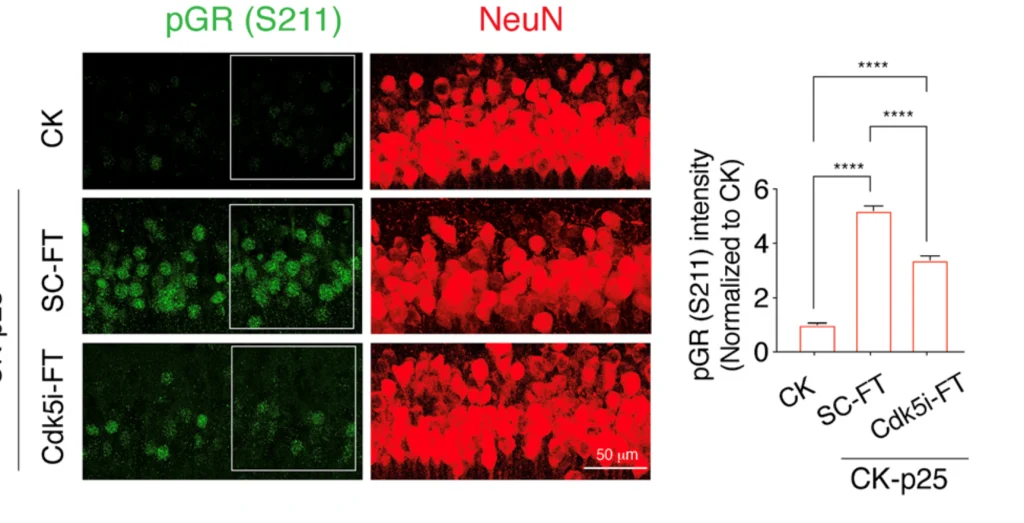
Cdk5i Peptide Mitigates Neurodegeneration Seen in Alzheimer’s Disease

Benefits of using Cdk5i peptide (increasedecrease)

  • ↑ Neuroprotection
  • ↓ Cdk5/p25 complex interaction
  • ↓ Tau aggregation (neurofibrillary tangles)
  • ↓ Neurodegeneration
  • ↓ AD progression
  • ↓ Mitochondrial dysfunction
  • ↓ Cdk5 abnormal upregulation
  • ↑ Cognition
  • ↑ Cell survival
  • ↑ Learning and memory

The Optimal Performance of AmyP53 Peptide for Alzheimer’s and Parkinson’s Disease

Recent studies suggest a different approach to elaborating therapies for these neurodegenerative disorders. In general, one of the typical pathological hallmarks of Parkinson’s (PD) and Alzheimer’s disease (AD) is the misfolding and accumulation of specific proteins like the α-synuclein and the β-amyloid, which, in high levels, are detrimental to the brain cells.[4] Even though most of the research effort is used to prevent the accumulation of these proteins, there is still no cure for neurodegeneration. However, several studies have pointed out that amyloids (β-amyloid) and α-synuclein oligomers are more linked to the symptoms of both disorders.[1-3] Oligomers are toxic and aggregate early before forming α-synuclein clumps and β-amyloid plaques—equally.[3] These oligomers are formed from the self-assembly of a few molecules of amyloid proteins. There are two oligomers: (1) the soluble oligomers and (2) the membrane-associated oligomers.[1]

Interestingly, only the membrane-associated oligomers are noxious when interacting with the plasma membrane.[3] Some articles refer to AD as a membrane disorder.[3] The membrane-oligomer interaction is generally arbitrated by molecules called gangliosides.[2] Gangliosides are assembled micro-domains of the membrane that form lipid rafts. [2,5] Gangliosides are used as connection sites by α-synuclein and β-amyloid proteins.[3] For a membrane-oligomer connection, first, they need to bind to gangliosides.[2] Once the oligomers bind the gangliosides, they form “amyloid pores”.[2,3] Amyloid pores are slight channels in which unregulated Ca+2 ions enter the cell, generating a calcium imbalance in brain cells.[3] In normal conditions, calcium is crucial in plasticity, signaling between neurons, synaptic transmission, and transport.[3,6]

On the other hand, the unregulated entrance of Ca+2 ions inside the cells caused an increase in toxicity and led to apoptosis (cell death).[4] In addition, high levels of Ca+2 ions stimulate the activation of pathways for the overproduction of other proteins like the tau protein, another pathological hallmark of AD. [6] Oxidative stress, synaptic decline, and plasticity have also been observed.[3] Therefore, finding molecules able to bind and block the gangliosides can help prevent amyloid-related oligomers from attaching and forming the amyloid pores, thus helping reverse or prevent the development of AD and PD.[1,3,5] 

AmyP53 is a peptide (KEGVLYVGHHTK) used in recent investigations to develop new treatments for AD and PD.[3] AmyP53 was created with the necessary binding properties of the oligomers to bind the gangliosides, thus avoiding the amyloid oligomers to bind and form the amyloid pores (see Fig. 1).[3] Once the AmyP53 prevents the amyloid pore formation, the Ca+2 ions maintain its average level. AmyP53 also prevents neuroinflammation, synaptic loss, neuronal death, tau misfolding, and mitochondrial dysfunction, which can all cause the development of neurodegenerative disorders, especially AD and PD.[1-4] To develop this peptide, the investigators identified recognition sites in the ganglioside structures and then tested different molecules that share the molecular characteristics for binding. [1-3] The Amyp53 peptide can be administered successfully through intravenous and intranasal administration.[3] However, the recommended method is the intranasal administration (nasal spray) (see Fig.2). [1,3] This peptide can be used as a treatment for both AD and PD because of the mechanism used. Recent studies have also shown that AmyP53 has excellent stability in temperatures up to 45 ◦C for months without signs of degradation.[3] In addition, the AmyP53 can cross the blood-brain barrier through both the intranasal and intravenous administration, where higher amounts of the peptide are found in the brain than in the blood.[1] 

How Does the SHMOOSE Protein Affect Brain Plaques in Alzheimer’s Disease?

SHMOOSE microprotein, a novel mitochondrial DNA variation connected to Alzheimer’s Disease pathology

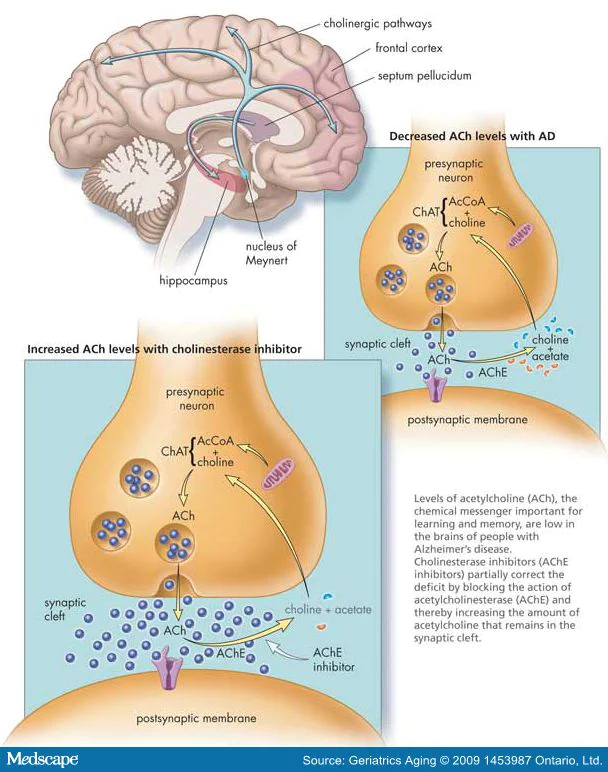
Alzheimer’s is a disease that has recently caught the attention of researchers because of the alarming increase in cases through the years. [1,7] This rare but common disorder affects around 6.07 million people in 2020 in the United States. [5] Now, there is no cure for AD. [7] The complexity of AD pathology makes it challenging for investigators to find solutions like treatments for the disease. Even though there is no cure, three acetylcholinesterase inhibitors therapies are approved by the FDA (donepezil, galantamine, and rivastigmine). [7] Acetylcholinesterase inhibitors therapies help compensate death of cholinergic neurons and offer symptomatic relief by inhibiting acetylcholine (Ach) turnover and restoring synaptic levels of this neurotransmitter. [7] The inhibition of the cholinesterase (AChE) helps in the deficit of Ach in AD patients by avoiding the conversion of Ach to acetate and choline, thus increasing the Ach levels in the synaptic cleft (see FIGURE 1). 

What is NAD+? How Does it Work?

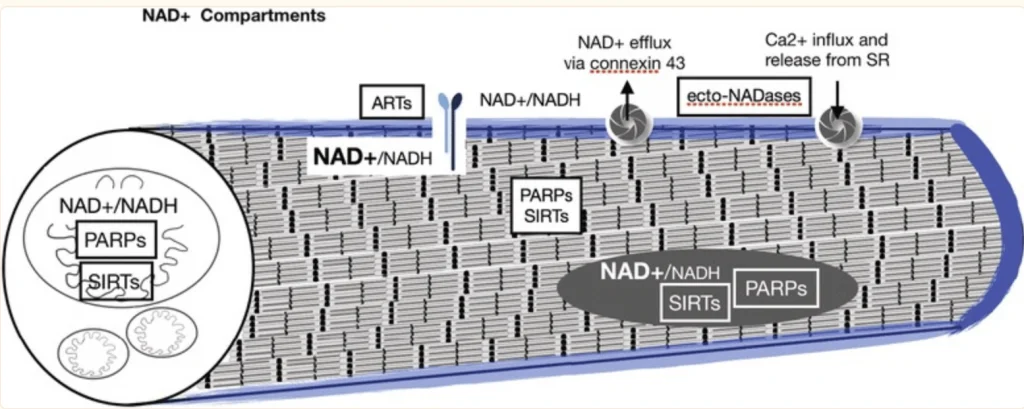
NAD+ is the second most abundant cofactor in the human body. Anti-aging therapies are becoming more mainstream as aging is now more often being viewed as a disease. Now that this transition is happening, the ability for NAD+ to activate PARPS, Sirtuins, and help with immune dysregulation has been thoroughly investigated and NAD+ and its precursors have been highly popularized. The clinical importance of maintaining cellular NAD+ levels was established early in the last century with the finding that pellagra, a disease characterized by diarrhea, dermatitis, dementia and death, could be cured with foods containing the NAD+ precursor niacin.

Additionally, cellular concentrations of NAD+ have been shown to decrease under conditions of increased oxidative damage such as occur during aging Altered levels of NAD+ have been found to accompany several disorders associated with increased oxidative/free radical damage including diabetes, heart disease, age-related vascular dysfunction, ischemic brain injury, misfolded neuronal proteins, and Alzheimer’s dementia. Interventions targeted at restoring NAD+ has been shown in animal models to support healthy aging and improve metabolic function, and dementia.

A need for NAD+ in muscle development, homeostasis, and aging

In a review study, researchers discuss the recent data that document conserved roles for NAD+ in skeletal muscle development, regeneration, aging, and disease as well as interventions targeting skeletal muscle and affecting NAD+ that suggest promising therapeutic benefits. The researchers also highlight gaps in our knowledge and propose avenues of future investigation to better understand why and how NAD+ regulates skeletal muscle biology.

Welcome back!

or
Menu
Explore

Search Peptides

Welcome back!

or
0