Research Categories
Research Categories

Sermorelin Acetate

ALL ARTICLES AND PRODUCT INFORMATION PROVIDED ON THIS WEBSITE ARE FOR INFORMATIONAL AND EDUCATIONAL PURPOSES ONLY. The products offered on this website are furnished for in-vitro studies only. In-vitro studies (Latin: in glass) are performed outside of the body. These products are not medicines or drugs and have not been approved by the FDA to prevent, treat or cure any medical condition, ailment or disease. Bodily introduction of any kind into humans or animals is strictly forbidden by law.

Sermorelin vs Ipamorelin and Tesamorelin

Sermorelin vs Ipamorelin and Tesamorelin

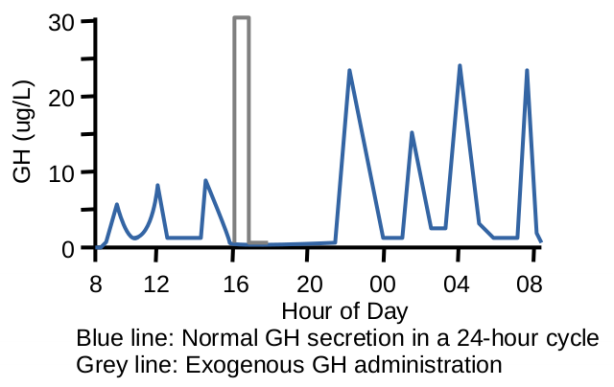
Sermorelin, Ipamorelin, and Tesamorelin are all peptides that stimulate the release of growth hormone (GH) in the body, but they have some differences in terms of their mechanisms of action and thus the overall effects that they cause. Sermorelin is a synthetic peptide that works by stimulating the secretion of growth hormone-releasing hormone (GHRH) from the hypothalamus. GHRH, in turn, triggers the release of growth hormone from the pituitary gland. Sermorelin is well known for extending growth hormone peaks and increasing growth hormone trough levels. It generally does not increase GH peaks, meaning it does not cause supraphysiologic levels of GH.Ipamorelin is a synthetic peptide that specifically targets the ghrelin/growth hormone secretagogue receptor. It stimulates the release of growth hormone directly from the pituitary gland. It is known for causing very large spikes in GH levels, well above normal physiologic peaks. It is a short-lived peptide, however, and so the GH spikes are short-lived as well.Tesamorelin is a synthetic peptide that is similar in structure to human growth hormone-releasing hormone (GHRH). It stimulates the release of growth hormone from the pituitary gland. Tesamorelin is used clinically for reducing adiposity (fat tissue) and is more similar to Sermorelin than it is to Ipamorelin. Like Sermorelin, it extends the length of time that GH peaks last, but does not generally cause supraphysiologic GH levels.Sermorelin and Tesamorelin are the most similar, but it would be mistake to conflate the properties of these two peptides. Despite the fact that both are GHRH analogues and thus stimulate the release of GH from the anterior pituitary, there are profound differences in overall outcomes produced by these peptides. Whereas Tesamorelin tends to produce weight loss via targeting of fat mass, Sermorelin tends to favor muscle building and balanced fat burning resulting in body composition change, but not necessarily a huge change in weight.These differences are just one example of how peptides from the same class can differ from one another based on simple structural changes made to their amino acid sequences. Researchers have, for years now, been investigating how these subtle changes influence target effects, half-life, off-target effects, bioavailability and other features of these peptides. Now, with enough different growth hormone regulators on the market, research is starting to shift to investigate how combinations of these peptides stack up to one another. Here is a look at how Sermorelin on its own might compare to a combination of Ipamorelin and Tesamorelin. 

Sermorelin vs Ipamorelin and Tesamorelin | Growth Hormone Profiles

The primary action of all of these peptides is to influence levels of circulating growth hormone. Tesamorelin and Sermorelin do this by acting on the GHRH receptor while Ipamorelin influences GH levels by acting on the ghrelin or growth hormone secretagogue receptor (GHS-R). The receptors that these peptides target in addition to how they bind to their specific receptors determines their impact on growth hormone levels.

Sermorelin is very similar in structure to GHRH and thus is similar in function as well. Research shows that Sermorelin can lead to an increase in GH with peak levels occurring about 30 minutes to a few hours after administration. On average, studies have reported GH increases in the range of 2 to 10 times the baseline GH levels following Sermorelin administration, with once-daily administration resulting in increases that are on the lower end of that spectrum. One of the benefits of using Sermorelin is that it promotes a natural, pulsatile release of GH. The body’s natural GH secretion occurs in a pulsatile fashion, with several peaks and troughs throughout the day. Sermorelin therapy aims to replicate this pattern, which is essential for the body’s overall growth and maintenance. Maintenance of pulsatile GH release is one of the primary keys to avoiding off-target effects.

Ipamorelin is a ghrelin mimetic and as such binds to the GHS-R. In clinical and research studies, Ipamorelin has been shown to increase GH levels, but the magnitude of the increase can vary. Typically, after the administration of Ipamorelin, there is a rapid spike in GH levels, and this peak can reach levels several times higher than baseline. Of the three peptides here, Ipamorelin is the most likely to cause massive, but short-lived increases in GH levels. This, of course, makes Ipamorelin useful when targeted GH peaks need to be timed with something like exercise, food intake, or sleep.

The increase in GH levels after Ipamorelin administration tends to be dose-dependent, meaning that higher doses are generally associated with a more significant GH response. The frequency and timing of Ipamorelin administration can also influence GH release. As a short-acting peptide, Ipamorelin can be dosed more frequently than Sermorelin to achieve net increases in GH levels. This is made possible not just by Ipamorelin’s short half-life, but by its near total lack of off-target effects. Ipamorelin is widely regarded in research circles as the most specific of the growth hormone secretagogues and as having the fewest off-target effects.

Tesamorelin is a GHRH analogue. Studies of Tesamorelin have shown that it can lead to an increase in growth hormone levels and this increase is generally within a physiologically normal range. The specific increase in GH levels can depend on factors such as the individual’s baseline GH levels, the dosage of Tesamorelin administered, and the duration of treatment. Like Sermorelin, Tesamorelin can help to preserve the normal pulsatile pattern of GH release from the pituitary gland, acting to extend the duration of GH peaks while having less effect on peak GH levels.
What Does Sermorelin Do?

What Does Sermorelin Do?

Sermorelin is one of the most widely tested and researched peptides in the world. According to Richard Walker, Ph.D., Sermorelin may offer a natural solution to the slow, but steady decline of growth hormone that we all experience as we age. This may not sound like much, but keep in mind that waning growth hormone levels have been linked to everything from lost muscle tone to increasing cardiovascular disease and dementia.

Dr. Walker, of the Duke University School of Medicine Center for the Study of Aging and Human Development, has studied sermorelin and growth hormone (GH) replacement for years. He likens sermorelin to the fountain of youth and has launched a number of trials to investigate its properties. As he points out, one of the benefits of sermorelin is that it is subject to normal feedback mechanisms in the body. This means it is safter to utilize sermorelin than GH. The way that sermorelin works makes it ideal for GH replacement according to Dr. Walker.

For those who are curious about why sermorelin is receiving so much research attention and are asking “what does sermorelin do,” the following is a summary of the scientific findings surrounding this remarkable peptide. Various sections take a look at the mechanism by which sermorelin works as well as the effects it has on a wide array of tissues.

Sermorelin vs HGH

Sermorelin Boosts Wound Healing

HGH itself is a potent stimulator of wound healing, so it should come as no surprise that peptides like sermorelin, that increase HGH levels, have positive effects on the rate of wound healing. What might be more surprising, however, is the fact that sermorelin can help to reduce scar formation and extent. Scars, while obviously leading to wound healing, can cause tissue- and organ-level dysfunction. Mitigation of scarring while still promoting wound healing is a holy grail of medicine. Nowhere is this more true than in the cardiovascular system.Scarring of the heart is especially problematic because scars in cardiac tissue interfere with the ability of the heart to conduct electrical impulses and contract correctly as well as efficiently. This is the fundamental process underlying much of heart failure, which is still the leading cause of death in most industrialized nations. Research in rat models shows that sermorelin can protect heart cells from death, increase the production of extracellular matrix components, improve blood vessel growth, and reduce inflammatory cytokine levels. All of these factors lead to reduces in the size of scars following cardiac injury, which in turn leads to improve cardiac function. There is a great deal of interest in using sermorelin in the setting of acute myocardial infarction (heart attack) as a means of reducing the long-term consequences of this devastating event[4], [5].

The Impact of Sermorelin on Sleep

The sleep cycle, which is to say the progression of brain function through the various stages of sleep including REM sleep, is at least partially regulated by orexin. This potent neurochemical is produced by specialized neurons that are strongly associated with growth hormone secretion. Research in fish shows that orexin secretion is heavily dependent on a healthy growth hormone-releasing hormone (GHRH) axis. This research shows that sermorelin can boost orexin secretion via its effects on the GHRH receptor[6].

It should come as no surprise, given the proponents of sermorelin as a potential peptide in the fight against aging, that sleep plays a very prominent role in the aging process. Though it is a common misconception that older people don’t require as much sleep as their younger counterparts, this is absolutely not true. The elderly require just as much sleep as the rest of us, but inadequate sleep is both a cause of and consequence of aging. Recent advances in both the diagnosis and treatment of sleep apnea are having a profound effect on improving this situation, but there is still a great deal of room for progress[7]. Sermorelin, but establishing a more youthful GH secretion pattern, may be one of the keys to helping to not only offset the effects of sleep on the aging process, but also the effects of aging on sleep. Dr. Richard Walker, of the International Society for Advanced Research in Aging (SARA), points out that sermorelin may be one of the most effective GHRH-R agonists for addressing the effects of aging and replacing HGH in treating growth hormone deficiency associated with age.

CJC-1295 vs Sermorelin.

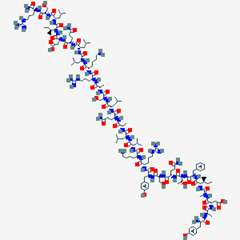
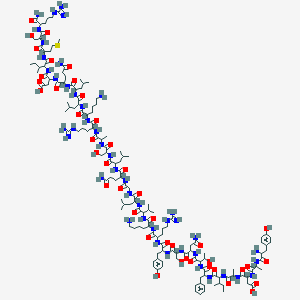
Sermorelin vs. CJC-1295 StructureBelow are the structures of sermorelin and CJC-1295 laid out in various formats. Notice that sermorelin is simply GHRH 1-29. That is to say, sermorelin is simply the first 29 amino acids from the much larger growth hormone-releasing hormone. CJC-1295 is also made up of the first 29 amino acids of GHRH, but some of the amino acids have been modified.

Sermorelin Structure

Sequence: Tyr-Ala-Asp-Ala-Phe-Thr-Asn-Ser-Tyr-Arg-Lys-Val-Leu-Gly-Gln-Leu-Ser-Ala-Arg-Lys-Leu-Leu-Gln-Asp-Met-Ser-Arg

Molecular Formula: C149H246N44O42S

Molecular Weight: 3357.933 g/mol

PubChem CID: 16129620

Source: PubChem

CJC-1295 Structure

Sequence: Tyr-D-Ala-Asp-Ala-Ile-Phe-Thr-Gln-Ser-Tyr-Arg-Lys-Val-Leu-Ala-Gln-Leu-Ser-Ala-Arg-Lys-Leu-Leu-Gln-Asp-Ile-Leu-Ser-Arg

Molecular Formula: C152H252N44O42

Molecular Weight: 3367.954 g/mol

PubChem CID: 56841945

Source: PubChem

Welcome back!

or
Menu
Explore

Search Peptides

Welcome back!

or
0