Research Categories
Research Categories

Obesity Research

ALL ARTICLES AND PRODUCT INFORMATION PROVIDED ON THIS WEBSITE ARE FOR INFORMATIONAL AND EDUCATIONAL PURPOSES ONLY. The products offered on this website are furnished for in-vitro studies only. In-vitro studies (Latin: in glass) are performed outside of the body. These products are not medicines or drugs and have not been approved by the FDA to prevent, treat or cure any medical condition, ailment or disease. Bodily introduction of any kind into humans or animals is strictly forbidden by law.

How does 5-Amino-1MQ (and JBSNF) increase NAD+ and Metabolic Rate while Regenerating Aging Skeletal Muscle?

“Aging is accompanied by progressive declines in skeletal muscle mass and strength and impaired regenerative capacity, predisposing older adults to debilitating age-related muscle deteriorations and severe morbidity.

Muscle stem cells (muSCs) that proliferate, differentiate to fusion-competent myoblasts, and facilitate muscle regeneration are increasingly dysfunctional upon aging, impairing muscle recovery after injury. While regulators of muSC activity can offer novel therapeutics to improve recovery and reduce morbidity among aged adults, there are no known muSC regenerative small molecule therapeutics.

We recently developed small molecule inhibitors of nicotinamide N- methyltransferase (NNMT), an enzyme overexpressed with aging in skeletal muscles and linked to impairment of the NAD+ salvage pathway, dysregulated sirtuin 1 activity, and increased muSC senescence. We hypothesized that NNMT inhibitor (NNMTi) treatment will rescue age-related deficits in muSC activity to promote superior regeneration post-injury in aging muscle.

Results revealed that muscle stem cell proliferation and subsequent fusion were elevated in NNMTi-treated mice, supporting nearly 2-fold greater CSA and shifts in fiber size distribution to greater proportions of larger sized myofibers and fewer smaller sized fibers in NNMTi-treated mice compared to controls. Prolonged NNMTi treatment post-injury further augmented myofiber regeneration evinced by increasingly larger fiber CSA. Importantly, improved muSC activity translated not only to larger myofibers after injury but also to greater contractile function, with the peak torque of the TA increased by ~70% in NNMTi-treated mice compared to controls. Similar results were recapitulated in vitro with C2C12 myoblasts, where NNMTi treatment promoted and enhanced myoblast differentiation with supporting changes in the cellular NAD+/NADH redox states. Taken together, these results provide the first clear evidence that NNMT inhibitors constitute a viable pharmacological approach to enhance aged muscle regeneration by rescuing muSC function, supporting the development of NNMTi as novel mechanism-of-action therapeutic to improve skeletal muscle regenerative capacity and functional recovery after musculoskeletal injury in older adults.”

“NNMT inhibition using 5-amino-1MQ (30µM concentration) in both the pre-adipocytes (P < 0.01, treated pre-adipocytes vs. untreated controls) and the adipocytes (P < 0.05, treated adipocytes vs. untreated controls) resulted in significant reduction in the intracellular levels of 1-MNA…” (5)

Risk of Muscle Wasting in Elderly:

“The population of older (60+ years of age) adults is rapidly expanding in the United States and throughout the world, placing ever-increasing strains on health care resources and an urgent need for improved approaches to elder care. One of the most significant impacts of aging is the progressive decline in skeletal muscle mass and strength, with concomitant deteriorations in physical function and mobility that are strongly associated with numerous chronic diseases and increased mortality. While all older individuals experience muscle degeneration, approximately 30% of adults over 60 years of age and 50% of adults over 80 years of age develop sarcopenia, a geriatric disease characterized by significant and objective defects in muscle mass, strength, and function. Sarcopenic elderly individuals are at a 2-to 5-fold increased risk for permanent disability and greatly diminished quality of life arising from progressive muscle degeneration, decreased muscle function, and poor muscle quality that predispose them to debilitating falls and substantial disease burden. Furthermore, as muscle regenerative capacity of older adults becomes increasingly compromised, it leads to delayed and impaired recovery following muscle injury, decreased mobility and independence, increased hospitalization costs, and higher mortality rates.”

AOD9604 vs Semaglutide

AOD9604 vs Semaglutide

AOD9604 and Semaglutide are two different synthetic peptides that have been studied for their ability to enhance weight management. AOD9604 is a peptide fragment derived from human growth hormone (HGH). It is believed to stimulate the breakdown of fat cells and increase fat oxidation, thereby promoting weight loss. Semaglutide is a glucagon-like peptide-1 receptor agonist (GLP-1 agonist) that is approved for the treatment of type 2 diabetes and, more recently, for weight management. It works by mimicking the effects of GLP-1, a hormone that regulates blood sugar levels and appetite. Semaglutide helps reduce appetite, increase feelings of fullness, and decrease calorie intake. It is administered as a once-weekly injection and has shown significant weight loss results in clinical trials.These two peptides share a lot in common, but work through entirely different mechanisms. They are also at different stages in the research process. Here is a look at how AOD9604 compares to Semaglutide. 

Peptides for Weight Loss

The weight loss industry, which hasn’t experienced any real breakthroughs in nearly half a century, is currently going through a bit of a renaissance. Prior to this current resurgence, Fen-phen was the last truly effective drug in this category and it suffered from serious side effects that resulted in it being pulled from the market. The bad rap that fen-phen got resulted in stagnation of research into potential treatments for weight loss. Most of the focus has instead been on diet and exercise, with bariatric surgery reserved only for the most extreme cases.

In recent decades, scientists have begun to explore some of the hormonal signals controlling energy balance in the human body. This originally led to the discovery and exploration of peptide hormones like leptin, which signals satiety, and ghrelin, which signals hunger. For a brief time, these discoveries were hailed as breakthroughs in the field and brought with them the promise of simple pills to treat the growing obesity epidemic. Unfortunately, the promises turned out to be so much hype as scientists quickly realized that while these peptides were important in signaling hunger/satiety in the central nervous system, they were not the stars of the show. Interest fizzled again.

What is NAD+? How Does it Work?

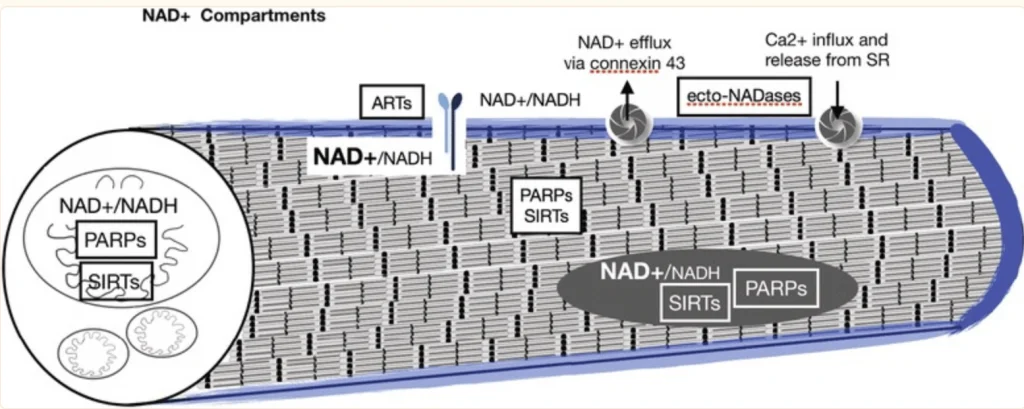
NAD+ is the second most abundant cofactor in the human body. Anti-aging therapies are becoming more mainstream as aging is now more often being viewed as a disease. Now that this transition is happening, the ability for NAD+ to activate PARPS, Sirtuins, and help with immune dysregulation has been thoroughly investigated and NAD+ and its precursors have been highly popularized. The clinical importance of maintaining cellular NAD+ levels was established early in the last century with the finding that pellagra, a disease characterized by diarrhea, dermatitis, dementia and death, could be cured with foods containing the NAD+ precursor niacin.

Additionally, cellular concentrations of NAD+ have been shown to decrease under conditions of increased oxidative damage such as occur during aging Altered levels of NAD+ have been found to accompany several disorders associated with increased oxidative/free radical damage including diabetes, heart disease, age-related vascular dysfunction, ischemic brain injury, misfolded neuronal proteins, and Alzheimer’s dementia. Interventions targeted at restoring NAD+ has been shown in animal models to support healthy aging and improve metabolic function, and dementia.

A need for NAD+ in muscle development, homeostasis, and aging

In a review study, researchers discuss the recent data that document conserved roles for NAD+ in skeletal muscle development, regeneration, aging, and disease as well as interventions targeting skeletal muscle and affecting NAD+ that suggest promising therapeutic benefits. The researchers also highlight gaps in our knowledge and propose avenues of future investigation to better understand why and how NAD+ regulates skeletal muscle biology.

Peptides Related to Weight Loss and Obesity Research

Reestablishing Normal Physiology

The answer to combatting adiposity and improving weight loss results is to reestablish normal physiological parameters. Sometimes this is referred to as “hacking your physiology” or “hacking your metabolism,” but it isn’t really hacking. All you are attempting to do is work within the confines of your biochemistry to optimize that very same biochemistry. How you go about doing this, however, depends on your current physiological status and your goals. The following is a look at both currently existing mechanisms for reestablishing physiology as well as approaches that are under scientific investigation. 

What We Know About Peptides for Weight Loss in 2024

All of the above measures work, but they require dedication and motivation. Unfortunately, the declines in GH as well as the inflammation caused by fat deposition that both come with obesity tend to make motivation difficult to muster. Even worse, when you do get some motivation, you may still not see great results because your body is less responsive to the effects of exercise thanks to low GH levels. Fortunately, science has acknowledged this conundrum and work is being done to develop solutions. Many of the peptides discussed in this section are only at the stage of animal research, but a few have entered clinical trials and a small minority are in use. Read on to see what the future holds for weight loss.

Peptides for Weight Loss Research

The use of peptides for weight loss is not a new endeavor, but it is one that has gained a great deal of attention in recent years. Peptides have been in use for decades to treat medical conditions like diabetes, but the approach always involved copying a natural peptide that was lacking and replacing it with a perfect synthetic alternative. Slowly, research has revealed that peptide derivatives of natural proteins can actually be designed in ways that target specific metabolic processes. When it comes to peptides for weight loss, the goal has been to generate peptides that burn fat while sparing or even increasing lean body mass. The results of those efforts are the peptides discussed below, which offer some of the most significant approaches to weight management yet developed by science.

Peptides for Weight Loss

Using peptides for weight loss is a paradigm shift in the industry. Past weight loss treatments generally focused on ramping up metabolism at a systems level, increasing the rate at which the body utilizes calories. This broad approach that does not distinguish between calories derived from fat and calories derived from other tissues, such as muscle. It generates weight loss, but often not the targeted fat burning that people really want

Targeted fat burning is just one of the advantages of peptides though. Peptides work with the body’s natural chemistry to alter how calories are used and stored. This can actually help to drive calorie use away from fat storage and into things like muscle and bone building. This results in a two-factor approach to “weight loss” that increases metabolism in adipose tissue while shunting calories toward more productive bone and muscle building.

The selection of peptides in this article have undergone extensive research investigating their weight loss properties. Some are currently approved by the FDA for specific indications while others are undergoing clinical trials. What should be noted is how many peptides fall into this category as well as the fact that they often have different secondary effects that may make them suited for specific indications.

Welcome back!

or
Menu
Explore

Search Peptides

Welcome back!

or
0