Ipamorelin vs CJC-1295
CJC-1295 and ipamorelin are both growth hormone secretagogues, though how they naturally raise growth hormone levels differs. Despite their differences in mechanism of action, these two peptides share a lot in common. That’s not to say that their effects are identical by any means though. For the discerning researcher, knowing the differences between these two peptides is critical to experimental design and so it is important to explore precisely how they differ. Additionally, the differences in their mechanisms of action mean that these two peptides might be synergistic in certain research applications and so those potential synergies are worth knowing.
Ipamorelin vs CJC-1295: Mechanism of Action
Ipamorelin is a growth hormone secretagogue receptor (GHS-R) agonist, which means it mimics the effects of ghrelin. Ipamorelin was derived from GHRP-1, which was itself derived as one of six (6) different molecules from ghrelin. As an agonist of the GHS-R, ipamorelin activates cells in the anterior pituitary gland to cause growth hormone release. It also binds to GHS-R subtypes in other areas of the brain to regulate reward cognition, learning, memory, the sleep-wake cycle, taste sensation, and glucose metabolism.
CJC-1295 is a derivative of growth hormone releasing hormone (GHRH) and binds to the GHRH-R in the anterior pituitary gland. As a GHRH-R agonist, CJC-1295 has fewer direct effects than ipamorelin because there is no GHRH-R outside of the anterior pituitary gland. Thus, CJC-1295 primarily causes an increase in growth hormone levels. The increase in growth hormone, however, has secondary effects that will be discussed in greater detail.
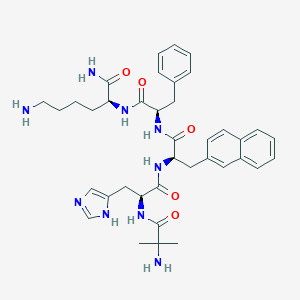
Ipamorelin vs CJC-1295: Structure
Ipamorelin is a much smaller molecule when compared to CJC-1295, but CJC-1295 offers the ability to be modified easily through the addition of a molecule known as DAC. DAC, or the drug affinity complex, can drastically alter the half-life of CJC-1295 and thus offers an easy means of tailoring the activity of the peptide. Both peptides must be administered Sub-Q for optimal results as there is extensive degradation in the GI tract as well as first-pass metabolism in the liver.