Research Categories
Research Categories

Ipamorelin

ALL ARTICLES AND PRODUCT INFORMATION PROVIDED ON THIS WEBSITE ARE FOR INFORMATIONAL AND EDUCATIONAL PURPOSES ONLY. The products offered on this website are furnished for in-vitro studies only. In-vitro studies (Latin: in glass) are performed outside of the body. These products are not medicines or drugs and have not been approved by the FDA to prevent, treat or cure any medical condition, ailment or disease. Bodily introduction of any kind into humans or animals is strictly forbidden by law.

MK677 vs Ipamorelin

MK677 and Ipamorelin are both selective agonists of the ghrelin receptor. Ipamorelin is a peptide analogue of ghrelin whereas MK677 is an unusual molecule that doesn’t fit into any specific category (it isn’t a peptide). These two compounds, while affecting a similar receptor, have different properties and produce different biochemical results. Many people are interested in the differences between MK677 vs Ipamorelin. Below is a look at how these compounds differ as well as how they are alike.

MK677 vs Ipamorelin

MK677, also known as Ibuatmoren and Oratrope, is an orally active, non-peptide, selective agonist of the ghrelin receptor. MK677 shares no structural similarities with ghrelin and therefore no structural similarities with Ipamorelin. Research shows that MK677 increases the secretion of growth hormone (GH) and insulin-like growth factor-1 (IGF-1) without affecting cortisol levels. It is currently under investigation for the treatment of growth hormone deficiency, muscle wasting, bone wasting, and appetite stimulation. MK677 has a long half-life and once-daily dosing in most trial settings.

Ipamorelin is a peptide analogue of ghrelin that stimulates the secretion of GH. It is among the most selective of ghrelin analogs with research revealing no effect on ACTH, prolactin, follicle-stimulating hormone, luteinizing hormone, thyroid stimulating hormone, or cortisol levels. Ipamorelin has been investigated in the treatment of GH deficiency, muscle wasting, and post-surgical ileus. It has also been the subject of numerous clinical trials for its ability to increase bone strength and mineralization.
​Peptides for Anti-Aging Research

Best Peptides for Anti-Aging Research

Anti-aging research has hit its stride in the last decade with advancements coming at an ever-faster pace. Recently, at Kyoto University in Japan, biologist Shinya Yamanaka has shared the Nobel Prize in medicine for work he did into how peptides can be used to reprogram adult stem cells to reduce the effects of aging. The research revealed that a protein cocktail is able to turn back the clock in mouse models, restoring the epigenomes of the mice to a more youthful state and reducing inflammation, musculoskeletal dysfunction, cognitive decline, and more[1].The advances made by Dr. Yamanaka come as no surprise to experienced anti-aging researchers because the trend has been toward more complex interventions using multiple peptides and approaches. According to Harvard’s David Sinclair, a founding member of the Paul F. Glenn Center for the Biology of Aging. According to Dr. Sinclair, the field has advanced during his career from extending the lives of relatively simple organisms like yeast and worms to being able to reverse aging in complex organisms like mice and non-human primates. Much of that progress has come from combining various techniques and layering knowledge to gain ever more sophisticated control of cellular aging. While Dr. Sinclair’s goal has primarily been to slow the onset of certain diseases associated with age, he points out that there is little difference between slowing disease onset and slowing aging. In fact, he points out that slowing the onset of heart disease, something that is commonly achieved in medicine today, is just an early form of slowing the aging process. Stem cell research and anti-aging proteins are just the next step on the path toward slowing the onset of aging and, eventually, maybe even halting aging altogether.

Peptides and Aging

At the forefront of current anti-aging research are techniques designed to reverse epigenetic changes in DNA. Epigenetic changes refer to changes in DNA expression patterns and not to changes in the DNA sequence itself. Research shows that, as part of the aging process, some genes are turned on and some are turned off. This leads to several the effects we associate with aging such as lower testosterone, lower growth hormone, changes in estrogen levels, alterations in wound healing, a decline immune function, changes in skin structure, alterations in learning and memory, and more.

The reversal of epigenetic changes has been shown in previous research to diminish or even reverse the effects of aging but has been difficult to achieve outside of cell culture. The discovery that peptides, particularly small peptides, can penetrate cell membranes and act as epigenetic signals has led to a rush to understand how these peptides can be useful both in isolation and in combination. Dr. Yamanaka’s research focused on the ability of certain peptides, in combination, to slow or reverse certain aspects of aging. There are a handful of peptides that have proved to be particularly interesting because of their widespread and obvious effects on aging in a variety of tissues. These peptides have helped to not only reverse the effects of aging in mouse models but have revealed some of the mechanisms by which aging occurs. Thus, these peptides, discussed below, have helped to advance the science a great deal. What is more, they are still offering insight to scientist who design careful trials to explore their function and mechanisms of action.

Tesamorelin vs Ipamorelin

Tesamorelin and Ipamorelin are both peptide-based therapeutics that belong to the class of growth hormone-releasing peptides (GHRPs). They are used for different purposes and have distinct receptor binding properties, but because they both affect natural growth hormone (GH) levels, they have similar effects in many respects. Both peptides have seen renewed research interest, however, thanks to a boom in the weight loss field led by peptide compounds like semaglutide and liraglutide. While both Tesamorelin and Ipamorelin are associated with changes in body composition, fat mass, and lean body mass, there is a great deal more to what these peptides can do.

Tesamorelin vs. Ipamorelin: Properties

Tesamorelin is approved for the treatment of HIV-associated lipodystrophy. This very narrow approval belies the peptide’s wider use as an agent for altering body composition. Research indicates that Tesamorelin can reduce fat mass, boost muscle and bone mass, improve peripheral nerve regeneration, and may even be useful in the treatment of mild cognitive impairment.

Ipamorelin, which underwent phase II clinical trials for the treatment of postoperative ileus, is known to be the most selective ghrelin receptor (aka growth hormone secretagogue receptor/GHSR) agonist yet discovered. It increases plasma growth hormone levels in animals but has no effect on prolactin, follicle-stimulating hormone, luteinizing hormone, thyroid-stimulating hormone, or adrenocorticotropic hormone levels. The astounding specificity of Ipamorelin makes it a highly useful peptide for studying the effects of increased GH levels with confounding results by elevating levels of other hormones.

Sermorelin vs Ipamorelin

Sermorelin vs Ipamorelin: Structure and Route of Administration

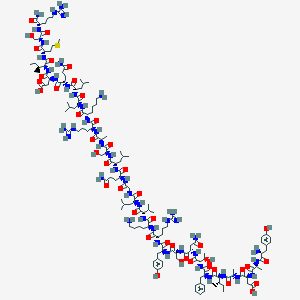
Sermorelin is made up of the first 29 amino acids from the much larger, naturally occurring GHRH peptide. It is the smallest fraction of GHRH than retains all of the properties of the parent molecule. Weighing in at 3357.9 g/mol, Sermorelin is a relatively large, heavy peptide that must be injected sub-cutaneous to be absorbed. It is not orally bioavailable. As a result of its large size, Sermorelin has a more significant three-dimensional structure than Ipamorelin and is thus is a little less stable in terms of storage half-life.

Source: PubChem

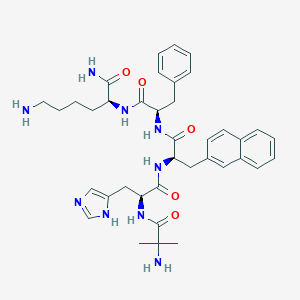
Ipamorelin is substantially smaller than Sermorelin at just 5 amino acids and 711.868 g/mol. It is a derivative of GHRP-1, which is itself a derivative of met-enkephalin. Though the most common route of administration for Ipamorelin is via sub-cutaneous injection, the peptide is also orally active and can even be absorbed though the nasal mucosa.

Source: PubChem

Ipamorelin vs Sermorelin: Lean Body Mass

Both Sermorelin and Ipamorelin favor the development of lean body mass over fat mass, but Sermorelin is the more potent of the two. This arises from the fact that Sermorelin is both a growth stimulator and a fat burner while Ipamorelin is a more general growth stimulator. That is not to say that Ipamorelin isn’t effective, it is, but ipamorelin isn’t as strictly favorable of lean body mass deposition as Sermorelin. This difference arises from the fact that Ipamorelin is a ghrelin analogue and ghrelin favors food intake in general. Its growth hormone boosting properties shift the overall balance away from fat deposition and toward lean body mass deposition, but the Ipamorelin peptide is best thought of as a general weight boosting peptide while Sermorelin is best thought of as a more exclusive booster of lean body mass. In fact, Sermorelin is often referred to as a lipolytic or fat-burning peptide.

Both peptides stimulate the development of bone and other connective tissue, but Ipamorelin appears to have the advantage in this realm. In fact, ipamorelin is so effective in boosting bone density and mineralization that it has been investigated as a potential treatment for corticosteroid-induced bone loss as well as osteoporosis[7], [8].

When it comes to muscle growth, Sermorelin is probably the big winner, though this can be debated endlessly. Sermorelin not only boosts muscle hypertrophy and hyperplasia, it reduces fat mass and thus causes a shift in body chemistry toward lean body weight. In other words, Sermorelin will always favor the production of lean body mass even if diet is not perfectly geared toward muscle development. Ipamorelin, on the other hand, is more of a mixed bag. It will always cause muscle growth, but ipamorelin may channel some of those calories into fat deposition as well.

​What Is Ipamorelin?

What Is Ipamorelin?

In the world of anti-aging research, a handful of peptides have become superstars. Ipamorelin is one of those peptides. This short peptide is just five amino acids in length, but is one of the most selective growth hormone secretagogue receptor agonists known. This means that ipamorelin research has been shown to help build lean body mass and fight obesity without having unwanted effects on other aspects of the body like hair growth or decreased sexual function[1].

Ipamorelin is a peptide, which means it is made of the same amino acid building blocks found in all proteins. Ipamorelin falls into the subcategory of anti-aging peptides as well as into the subcategory of fat-burning peptides. In animal studies, it has been shown to effectively fight the signs of aging while benefiting muscle growth, bone health, and GI system function.

Because of its relative lack of secondary effects, ipamorelin is often referred to as the gentle growth hormone releasing peptide. This is because, when compared to other peptides like Sermorelin or GHRP-6, Ipamorelin tends to only affect the growth hormone axis. This makes it particularly useful in research exploring the isolated effects of growth hormone secretagogue agonists.

Welcome back!

or
Menu
Explore

Search Peptides

Welcome back!

or
0