Research Categories
Research Categories

Alzheimer's Research

ALL ARTICLES AND PRODUCT INFORMATION PROVIDED ON THIS WEBSITE ARE FOR INFORMATIONAL AND EDUCATIONAL PURPOSES ONLY. The products offered on this website are furnished for in-vitro studies only. In-vitro studies (Latin: in glass) are performed outside of the body. These products are not medicines or drugs and have not been approved by the FDA to prevent, treat or cure any medical condition, ailment or disease. Bodily introduction of any kind into humans or animals is strictly forbidden by law.

Stem Cells Show Promise for Alzheimer’s and Parkinson’s Disease.

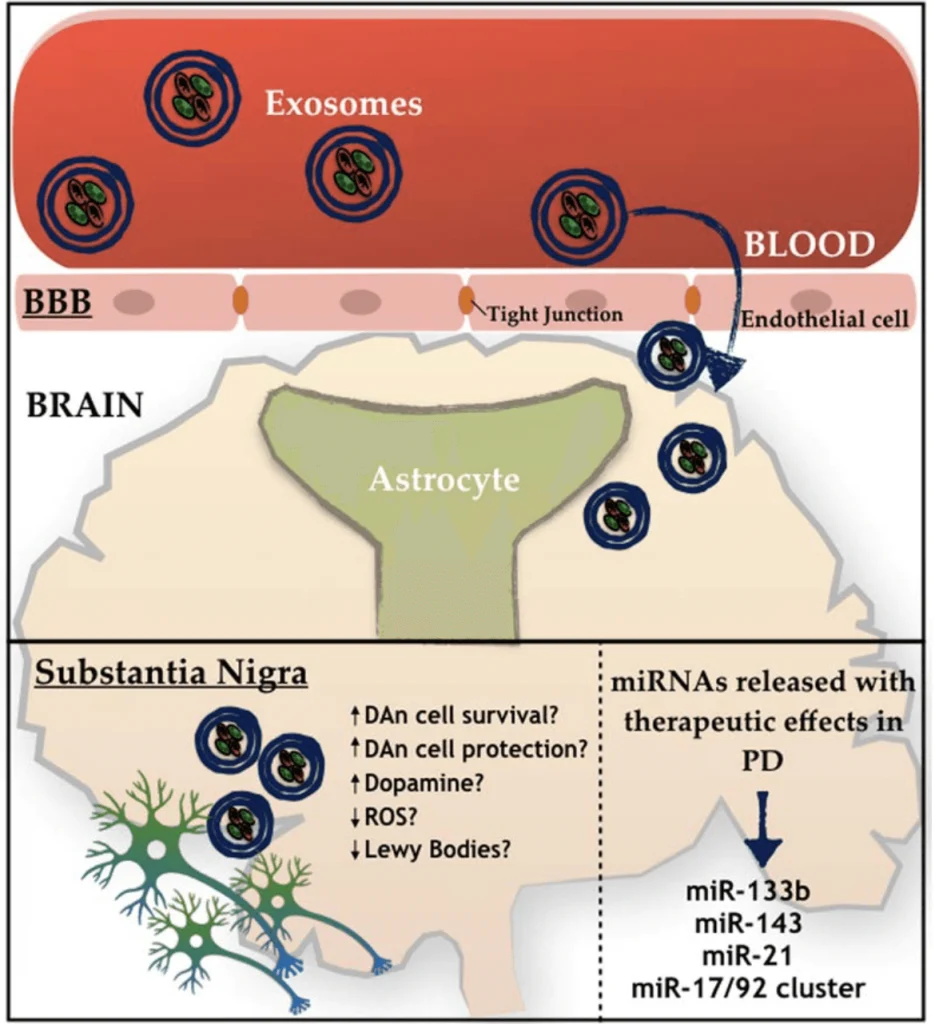
Mesenchymal stem cell-derived exosomes as a promising therapy for Parkinson’s and Alzheimer’s Disease.

Recently, investigators suggested using Mesenchymal stem cells (MSCs)–derived exosomes as a therapy for different conditions, including Parkinson’s Disease (PD).[1,2,5] MSCs can be found in various body parts and specialize in different cell types depending on the body’s needs.[1] These cells produce extracellular vesicles called exosomes that have been studied as an alternative medicinal agent because of their stability and biological prospect in terms of the substances they carry, like signaling molecules, cytokines, enzymes, and micro-RNA (miRNA).[1,2,4] All these components are essential in maintaining cellular homeostasis, while the miRNA is more involved in regulating gene expression. [1,2,4] Many studies with MSCs have demonstrated several benefits in other neuropathological conditions. [1] One of the insights is that the MSCs have been pointed to activate different neuro-regeneration processes, opening a door for many possible ways to serve as promising therapies for future clinical trials. [1,3] Two targets for developing new treatments using MSCs are PD and Alzheimer’s disease (AD). [2,3,4,7] PD is characterized by the deterioration of dopaminergic neurons and the insufficiency of dopamine production. [3,6,9] Generally, the decrease of dopaminergic neurons is related to the accumulation of Lewy bodies (protein aggregates of α-synuclein) inside the neurons, which affects the normal functioning of those cells.[9] Interestingly, MSCs-derived exosome seems to be able to decrease one of the leading causes of PD, neuroinflammation.[2,5,10] On the other hand, AD is described as a brain illness that presents as neurological hallmarks the formation of amyloid plaques (Aβ) and neurofibrillary tangles causing synaptic loss
Buntanetap: A Promising Small Molecule Inhibitor for Neurodegenerative Diseases

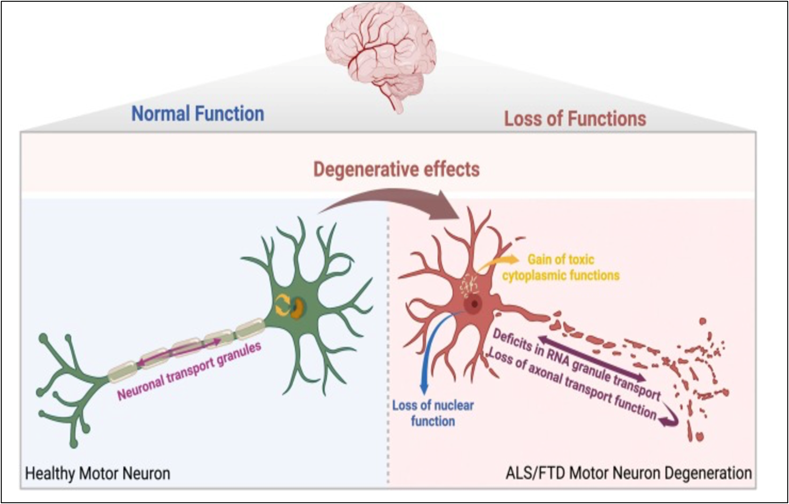
Figure 2. The role of TDP-43 in neurodegeneration of motor neurons

Buntanetap has been demonstrated to be a multitargeted therapy capable of decreasing neurotoxic proteins involved in the development and progression of AD by reducing the levels of amyloid beta, improving neuroplasticity, and reducing neuroinflammatory species. Moreover, this novel therapy can also decrease PD-related proteins like alpha-synuclein and TDP-43, which have been demonstrated to have a role in the degeneration of motor neurons, thus causing the progression of neurodegenerative disorders like PD. In general terms, Buntanetap promotes the recovery of cognition, increases proliferation, improves neuronal plasticity, and significantly reduces neuroinflammation, thus slowing down the progression of PD and AD.

Peptide P21 slows the progression of neurodegeneration and Alzheimer’s by removing Tau protein build-up and reducing the production of Beta Amyloid plaques.

In Alzheimer’s disease, degeneration of brain synapses happens before Beta Amyloid plaques and Tau protein aggregates are produced.

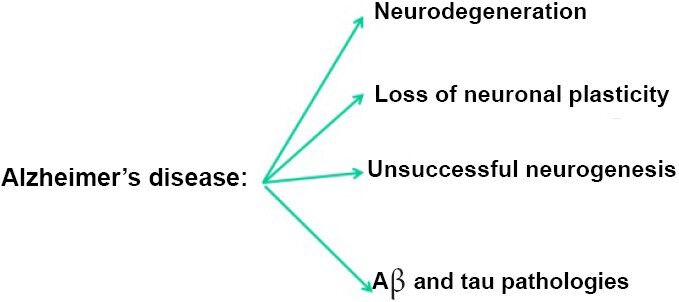
Both in AD and in its animal models the loss of neuronal plasticity is known to precede any overt formation of Aβ plaques and hyperphosphorylated (p) tau neurofibrillary tangles.” (1)

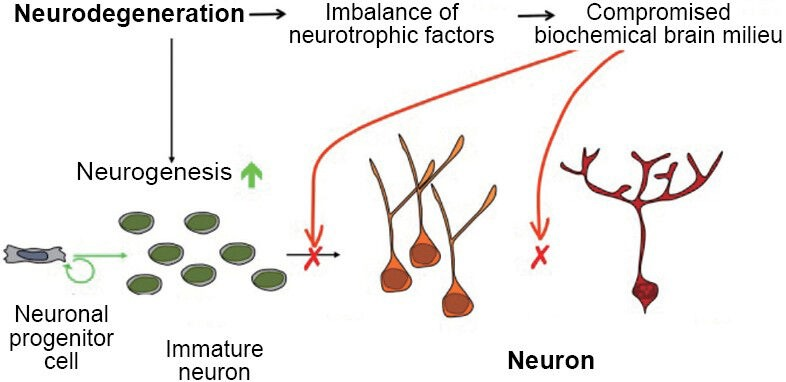
“Alzheimer’s disease responds to neurodegeneration by initiating neurogenesis in the dentate gyrus which, however, due to a lack of the proper neurotrophic support, is not sustained and the newborn neurons do not mature into functional cells.” (1)


“Alzheimer’s disease is characterized by neurodegeneration associated with loss of neuronal plasticity and in the dentate gyrus, proliferation of newborn cells which do not mature into functional neurons…” (1)


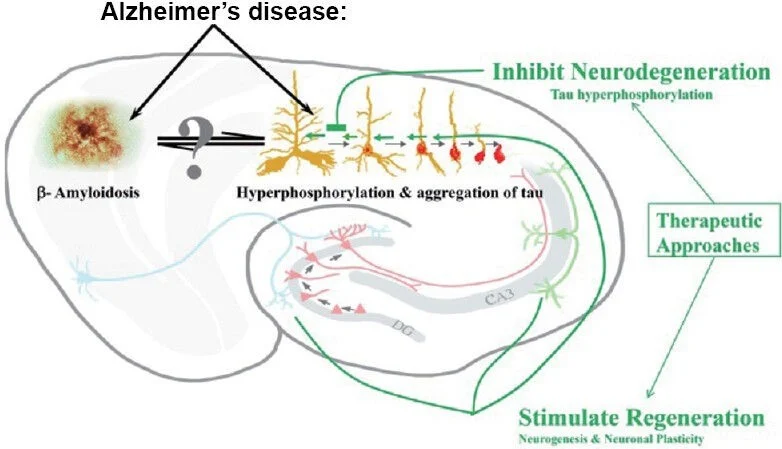
“Two major therapeutic approaches to Alzheimer’s disease and related conditions.While one therapeutic approach to Alzheimer’s disease is the inhibition of neurodegeneration that is associated with neurofibrillary and Aβ pathologies, another approach is to stimulate the regeneration of the brain by enhancing neuronal plasticity and neurogenesis that culminates into formation of mature functional neurons.” (1)

Proper neurogenesis (birth of new neurons) by peptide P021 was shown to remove Tau protein aggregates and reduce the production of new Beta Amyloid plaques.

“Moreover, the P021 treatment markedly reduced tau pathology and attenuated the generation but not the clearance of Aβ in 3xTg-AD mice.” (2)

“Cognitive performance was studied by assessing episodic memory with Novel Object Recognition task at 16-17-months post-treatment. We found that P021 treatment initiated during the synaptic compensation period can prevent neurodegeneration, Aβ and tau pathologies, rescue episodic memory impairment, and markedly reduce mortality rate. These findings for the first time show effective prevention of AD changes with a neurotrophic compound that targets neurogenesis and synaptic plasticity, suggesting that improving the health of the neuronal network can prevent AD.” (3)

“The AD brain responds to neurodegeneration by stimulating neurogenesis, however, because of the lack of a proper neurotrophic microenvironment of the hippocampus, this effort of the AD brain to replace lost neurons with new neurons is unsuccessful and culminates in failure of neuronal survival, maturation, and integration. As the disease progresses, the neurogenic failure becomes severe, and contributes significantly to cognitive decline.” (4)

​Cerebrolysin and Vascular Dementia

Cerebrolysin and Vascular Dementia

A Look into the Research:

Vascular dementia (VaD) is the second most common form of dementia after Alzheimer’s disease (AD). The term ‘vascular dementia’ refers to a constellation of cognitive and functional impairments all caused by disordered blood flow to the brain. Vascular dementia can be considered a subset of the larger syndrome of vascular cognitive impairment (VCI), that is all cognitive syndromes associated with a cerebrovascular brain injury. VaD includes dementia caused by ischemic or hemorrhagic cerebrovascular diseases (CVD) or by ischemic hypoxic brain lesions of cardiovascular origin.

Vascular dementia and stroke disease are closely linked, but the terms VaD and poststroke dementia (PSD) are not synonymous. Although most PSD cases are pathologically confirmed as VaD, some have been reported to be other dementia related pathologies, such as AD.

Vascular dementia has traditionally received less attention than AD, yet international epidemiological data suggest a substantial global burden from VaD. The prevalence rate of VaD has been estimated to double every 5.3 years, compared with every 4.5 years for AD. In North America, AD accounts for 44% to 70% of all dementia, while VaD accounts for 14.5% to 20%. Studies in the UK have estimated the incidence rate of AD as 1.59/1000 person years, whilst the incidence rate of VaD was 0.99 cases/1000 person years. The prevalence of VaD among individuals aged 65 years and older was 1.50% in China between 2008 and 2009, while AD was the leading cause of dementia (3.21%). Although earlier studies in Japanese populations demonstrated a greater prevalence of VaD than AD, recent studies have shown that the trend has shifted with no changes in VaD prevalence and increases in AD prevalence over time.

Peptide Research for Neurocognitive Improvement.

Cognition is a complex system encompassing processes such as episodic memory, working memory, executive function/inhibition, spatial learning, language/vocabulary comprehension, processing speed, and language/reading decoding. Changes in synaptic plasticity, the ability of the brain to change and adapt to new information, can be short lived from milliseconds to years. Short lived forms include facilitation, augmentation, and potentiation which enhances neurotransmitter release.

These dynamic changes represent the molecular basis for learning and memory. This synaptic plasticity can be influenced by several factors e.g., aging, diseases (obesity, diabetes, hypertension, dyslipidemia), toxins (smoking and alcohol), and exercise. Aging has been estimated to trigger performance decline with an incidence of mild cognitive impairment of 21.5–71.3 per 1000 person-years). Cortical thickness and subcortical volume are shrinking 0.5–1% annually as a morphological sign of cognitive decline with plaques and axonal degeneration. Dementia is diagnosed when the acquired cognitive impairment has become severe enough to compromise social and/or occupational functioning with increasing prevalence.

Worldwide, around 50 million people have dementia and, with one new case every three seconds, the number of people with dementia is set to triple by 2050. Thus, there is a huge need for new research in order to combat the above-mentioned metrics. The peptides below have undergone extensive research to help aid in the improvement for our neurocognitive system.

Selank

Both Selank and Semax are melanocortin’s and have pleiotropic effects involved in brain health and function. Selank by itself has traditionally been prescribed for anxiety and depression. Selank has pronounced anxiolytic activity and acts as a stable neuropsychotropic, antidepressant, and anti-stress medication.

Semax

Semax is used as a therapeutic with pathologies related to brain circulation dysfunction. As a combination, Selank/Semax has applications in improving learning processes, exploratory behavior, regeneration and development, nociceptive and in amatory processes, accelerate nerve regeneration and improve neuromuscular performance and overall neural health.

Welcome back!

or
Menu
Explore

Search Peptides

Welcome back!

or
0